Avsnitt
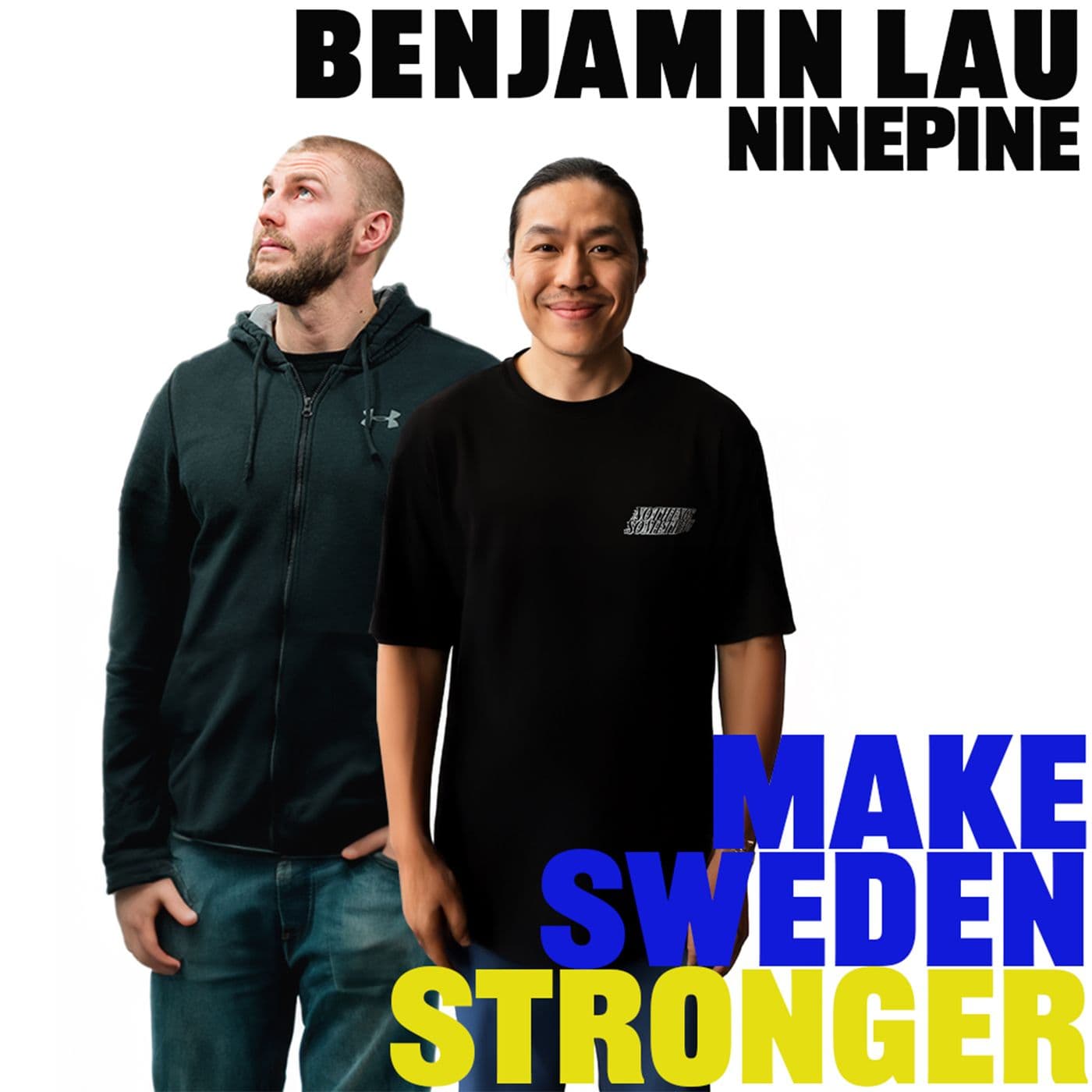
Benjamin Lau - Medgrundare Ninepine
Intervju med Joel Löwenberg
Benjamin Lau är en en av grundarna bakom det oerhört fascinerande varumärket Ninepine.
Med en explosionsartad tillväxt och en extrem ödmjukhet i synen på produktutveckling, marknadsföring och ledarskap så är det ett bolag och en person att ta lärdom av.
Det känns lite weird att säga att Benjamin är någon att hålla ögonen på framöver eftersom han redan är en rätt hårdbevakad profil inom Ehandelsvärlden.
Men, den här killen kommer gå långt.
Det är en mycket värdig gäst att förlora sin "Intervjua-På-Engelska-Oskuld" till...
Enjoy!
Lyssna
YouTube
Det här pratar de om
Sammanfattning
I det här avsnittet gästar Benjamin Lau, medgrundare av Ninepine, för ett samtal om mode, ledarskap och hur ett bolag kan växa explosionsartat utan att förlora känslan för produkt och disciplin i vardagen.
Joel och Benjamin pratar om vad Benjamin tog med sig från tidigare misslyckanden och från tiden på Facebook, varför Ninepine byggts med generalister som får säker gjorda i stället för ett batteri av smala specialister och hur bolaget hittade en ovanlig kombination av stark produktkänsla och extrem operationell nykterhet.
Samtalet går också in på varför den fysiska butiken blev viktig tidigare än många trodde, hur Ninepine utvecklär produkter utifrån verkliga problem snarare än trendjakt, hur Benjamin lärt sig skilja på att driva business och att faktiskt leda människor samt hur mycket av bolagets styrka som i slutänden ligger i kassaflöde, leverantörsrelationer och närmast manisk sparsamhet.
Nyckelämnen
Personer och bolag
Kapitel
- Det första engelska avsnittet och varför Benjamin känns ovanligt oberörd
Joel sätter upp ett annorlunda avsnitt och Benjamin får tidigt förklara sin ganska stoisk-lugna relation till framgång, press och offentlig uppmärksamhet.
- Hype, piedestaler och varför han inte upplever sig framme bara för att andra gör det
Här pratar de om hur yttre beundran kan skava mot den interna känslan av att allt fortfarande bara är ett arbete som måste förbättras steg för steg.
- Misslyckanden före Ninepine och en annan definition av vad framgång är
Benjamin går tillbaka till tidigare bolagsförsök och beskriver varför det för honom är större att kunna bära många människors försörjning än att kunna peka på en snygg omsättningssiffra.
- Facebook, legacy modebolag och varför Ninepine såg ett bättre fönster
Samtalet går in på vad Benjamin lärde sig i techvärlden, hur det skiljde sig från klassiska modeorganisationer och varför tajmingen för ett nytt dammodebolag kändes ovanligt stark.
- Generalister, Kimberly och varför de hellre anställer doers än silospecialister
Benjamin beskriver hur Ninepine valt att bygga teamet, varför multidisciplinära människor ofta skapar mer fart i ett snabbt bolag och hur den kulturen påverkar hela organisationen.
- Varför de öppnade butik och vad som hände med förtroende och konvertering
Här går de igenom varför en fysisk butik blev viktig tidigare än väntat och hur den inte bara säljer produkter utan också skapar legitimitet och trygghet i hela varumärket.
- Produktutveckling underifrån och varför de jagar problem, inte trender
Benjamin förklarar hur Ninepine utvecklär produkter utifrån konkreta irritationsmoment hos kunden och varför inspirationen lika gärnå kan komma från outdoor- och arbetsplagg som från modevärlden.
- Att leda business är inte samma sak som att leda människor
Ett viktigt spår i avsnittet handlar om hur Benjamin själv fått lära sig chefskap, hur kultur måste byggas aktivt och varför det är en helt annan disciplin än strategi och tillväxt.
- Lager, betalningsvillkor och den verkliga vikten av kassaflöde
Mot slutet blir avsnittet mer finansiellt när Benjamin går igenom hur hårt lager binder kapital, hur betalningsvillkor förhandlas och varför likviditet styr mer än många vill erkänna.
- Leverantörspitchar, Vietnam och en nästan brutal sparsamhet i vardagen
Avslutningen kretsar kring hur leverantörer väljs, varför fabriksdialog ibland liknar investerarpitchar och hur mycket av Ninepines framfart som bygger på disciplin kring varje liten kostnad.
Transkript
I have no angry colleagues, you never fight, and there are no heavy eyes. Now I may get screwed for this, but... I agree. But, what do you burn the most for? Welcome to the podcast Make Sweden Stronger, And today it's a big moment for the podcast, because it's the first time I will take it in English, and it's a very, very special guest that we have invited to this moment, and it's Benjamin Lau on Ninepine. And I think it's a worthy guest to take his English innocence for... Welcome to the podcast, Benjamin. Did you understand that sentence?
Yes, and apologies for making you maybe semi-uncomfortable with English.
I'm more uncomfortable seeing... I'm seeing your background here, and I generally think you're a very nice person. I met you live, and you seem like a very friendly person, but you do play guitar, I can see. And are you one of those people that I tend to hate at parties and stuff like that? They bring their guitar and they start singing. For fuck's sake, we just want to talk.
Playing Oasis, Wonderwall. Definitely not. I love guitar. I played as a kid, and it was hard convincing to convince my parents to play guitar instead of piano. Because of course, as an Asian kid, piano and violin is the...
It's the go-to moves.
It's the go-to instruments. Guitar is for the rebels or the school dropouts perhaps. Especially electric guitar. Electric guitar is for the devil. But I love it, and I really picked it up again. I played in bands and stuff as a teenager during uni. So for me, it's more of... I'm not amazing at it, but for me, it's like an outlet. At night, when I'm working, procrastinating, I'm trying to have a more rigid schedule on how I can improve as well.
You seem like... Because I read into you before this podcast, and I talked to you, you have a successful company. You seem like a very humble guy. You seem to have graduated school with honors and stuff. And now you also play guitar. What's your shitty secrets? What are you really bad at?
To be frank, I'm bad at a lot of stuff. And most things are learnable, right? Like guitar is a skill, like, you can learn to a certain point. Of course, there's a threshold where the talent and like super, super hard work gets involved. But I think it's with most things, right? Like, you can learn most things to a decent level. It's just mastery is a different one. So like, look, I've never played soccer or football in my life. So like, it's a bit embarrassing, like, because, you know, I used to be a swimmer, and I just never got involved in soccer or football. And like, you know, when you hang out with mates and stuff, like, people, it's pretty common, like, at the park or the beach, you play football. And I'm just like, oh, shit, I'm like out of my comfort zone. Or like, even like, I'm not a, like, my dad's a handyman, like, you know, he has all the equipment, like, bandsaws. He can build a table. And like, Kusha, who does nine pine as well, he can renovate toilets, he can, like, build stuff. But I, I mean, I can follow, like, instructions, like, a recipe, you know, like, if it's like a quick cut. But I'm just, I'm just not a handyman. Like, it's...
I see. Okay, okay.
It's, I really suck at that.
I'm very happy to hear that, because I can install a dishwasher. I used to work, like, an installer of white goods. And, and I can lay floor and stuff. And that, that makes me feel some, some leveling with you here, so I don't have to only fanboy you for the rest of the interview. I know that if we have to put up a shelf or something, well, I can, I can beat you to that, at least.
Please don't ask me to do anything like that. It'll be quicker.
Okay, sounds good. Let's, let's skip all the personal stuff and go into Ninepine, because that's probably what people want to hear about, and what I want to hear about. And because Ninepine seems to be the it brand, I'm making quotation marks, but it's been very hyped in different articles and podcasts lately, and I've seen you and your colleagues on panels and stuff. Does it feel a bit weird to be like put on a pedestal like that, or being hyped like that for such a short time? It's gone very fast.
It's very flattering to hear that. Yet I don't really feel like personally like we're put on pedestal. Of course, there's like noise and stuff. But I think like people should take it with a grain of salt. Because I mean, when we started this like, you know, five years ago, I mean, we were nobodies and we still are nobodies. I mean, we're just normal people. But it was hard to get in contact with people and people maybe took longer to reply to e-mails perhaps, or other companies, or other kind of, maybe people you looked up to, or I looked up to as like potential mentors, like, oh, like, hey, can you help me there? I guess getting help is a bit harder, but weirdly enough, it's like easier to get help now. But I think people should just kind of be careful when you listen to podcasts or hear people speak, because I guess with the, quote unquote, like, success, everything is relative. There is a tendency for people to build this hubris, I think it's hubris is a word, where you just think you're invincible. You think you know all. I mean, there's a huge survival bias in terms of sampling and like who speaks in these type of like settings and events. So I'll be super careful. And I guess it's not surprising. I guess it's like, you know, with sports people, you know, if it's like a Michael Phelps or Usain Bolt, people want to dissect what they're doing. Okay, what's their dietary kind of plan? What's their training habits? Just so they can perhaps replicate, you know, their skill or their kind of external success to a certain level. Of course, like, they have some like crazy anatomy differences that they're born with, like Michael Phelps, for example, which is hard to replicate. But for me personally, though, I'm pretty disconnected to all of it. Like, I don't feel that I'm really in the whole, like, say, retail ecosystem in Sweden, possibly because I'm already like an immigrant outsider. But I just tend to kind of just focus on my own path. I'm super into, like, like, stoicism, like, just as a grounding. So I guess not let oneself be carried away by the ups and the noise. And at the same time, by not getting carried away with that, you don't get carried away with the lows as well. Because I guess one of the risks of being too, like, personally involved in the ego when it comes to people talking about us, oh, wow, you did this, blah, blah, blah. Because if you kind of jump on to that and, like, really internalize that, then if and when it goes sideways, I mean, you're also going to feel that too. So kind of hedging my emotional bets.
Is that always good? Isn't it kind of nice to enjoy the ups and downs a bit?
I mean, of course, to some degree, right? Of course, you need to reflect and then be proud of yourself in terms of where you've come and compare yourself to the person you were like yesterday. But at the same time, I am weary that there is a snowball effect and it's very easy to become detached and like ungrounded. But of course, you have to enjoy successes and like small wins. I'm not saying that. I'm not saying like be like boring, but I think it's been a bit more like log on, I guess you would say.
Yes, sounds right. In your head, do you think you actually... I know it's a weird question for many people, but do you think you actually had success yet, or is this just warming up?
I mean, success, as I said, it's really relative, right? And if you compare to my previous ventures, I mean, it's successful. That's why you don't hear about the other ones. I mean, Kush and I started a bunch of companies before. We tried to sell umbrellas, we tried to sell walls, we tried to sell bags. I mean, so I guess compared to those, those obviously don't exist anymore, so that is successful. But I guess when you get to a position, I mean, you always talk about like in your pods and in your talks about like revenue goals and like these targets, and you speak about that quite openly on LinkedIn. And the funny thing is that when we started Ninepine, like we had this goal of like hitting this 100 million Swedish krona mark, and like we achieved that. But the goalposts just keep moving. They're always moving. So from that point, you're never feeling successful because you're always comparing it to the next person or the next company. But on a personal level, like I'm like super proud of what we've done. And going from a corporate job to being, I guess, self-employed and then not having any salary for like a few years, working side jobs, studying on the side to get a little help. And being able to pay myself a salary was like, back then, that was success. And I still feel really proud that I can pay myself a salary. And not even that, I mean, you know, it's like now we're supporting other people and other people's families. That's a huge responsibility. So from that point of view, I think it's, I'm personally proud of what we do.
I once did like the calculation of how many people we support, because it's very simple to just think of your colleagues. But there's also like the logistics people who drive your stuff. How much do we pay for advertisement? How much do we pay the producers? How many people in, for us, it's China and Holland and Germany and Spain. How many people there do we support through our purchases and stuff like that? And then our taxes, how many people do they pay for? So it's quite a lot of people that the company actually supports. That's not your colleagues. And I think that's a cool, like mental image to have. Like it's, oh, fucking hell, it's like 60, 70, 80 people that I support from just this.
Yeah. And I think like when we, during our time at Facebook, we were there during like the really turbulent political times in Cambridge, I think, and all that kind of stuff. But one thing, you know, kind of maintained in the communications there, at least in the business group was that small businesses, like because I guess Facebook and those type of platforms really will help businesses like ours, like grow and acquire customers and like make customers happy with products and services. But at the same time, essentially, they're supporting small businesses or businesses in general, because they create jobs, they create jobs and livelihoods for people. And I am a strong believer in that. And with that perspective, it's also like, you know, on a personal level, like, you know, I live in Solna in Stockholm, and like, you know, just a new cafe opens, I mean, or like a new restaurant opens. I mean, we both know how difficult it is to get a business up and running, let alone in hospitality, for example.
Yeah.
I mean, and they're supporting people, and I guess I just feel obliged also to eat there instead of McDonald's.
I hate when a new place opens up, and you go there and eat, and the food is bad, and you have to be like, oh, shit. I want to do the right thing, but no, no, I'm not coming back. Sorry, mate.
Yeah, I mean, sometimes, even if it's like that, like sometimes I would still leave a Google review. I leave a lot of Google reviews. I'm like one of those local guides.
I'm as well. I'm like the top. I always get those, oh, 5,000 people read your review, and I'm like, oh, okay.
There's something wrong with us. But I would still like give like a positive review, just to help them out maybe.
Like I said, my big goal, not today, but one day I'm going to find your like shitty qualities, just so I can, you cannot be always humble and friendly person. I don't believe in that.
Maybe not in when it gets competitive.
Okay, yeah. If we go back to when you started this company, was there, it's very easy to think in like a retrospect, but was there something actually different with Ninepine compared to the other companies that you guys started? When could you see like, this is for real, this is going to take off? What differed?
That's a really good question. And I think it, like for most people, if you kind of look at the industry, I mean, going to the clothing online, it's like the most cutthroat competitive like landscape, right? If you did this, if you presented this as like a school course, I mean, even in high school, like the teacher would be like, wow, no, don't do this. For Kush and I, when we had the privilege, it's a privilege, right? To work at a big tech company like Facebook and see how they run things. But at the same time, since we could ride on like the branding of Facebook, I mean, we could speak to many CEOs and CMOs and as new graduates, like that's not very common, right? So that was a huge privilege. And we got to see and speak to C-levels and owners of a broad spectrum of different companies. So on one hand, we worked a lot with tech savvy companies. A lot of them were VC backed, had acquisition goals, super data driven and really high performing teams. Just in terms of like how they approached projects and tasks, whether it's like through lean principles or through scrum, all like the jargon, right? And then on the other hand, we worked with a lot of cool brands or even legacy brands in consumer, not just apparel, but just consumer in general. Because we tended to work with B2C companies, more than B2B companies, since it's mainly B2C companies who advertise on Facebook. But then you saw these kind of traditional companies, and like organizationally, like how slow they were. Or just like, you know, I think a common thing in like fashion brands, like you had like a brand team, then you had a performance team, and like it was just very like siloed. So obviously on the organizational level, we saw, wow, a lot of these like tech companies had really high performing organizations. A lot of consumer companies did not have that. And then on this second node, which is like product and services, we could really see, we had like huge insights to see what about verticals, whether it's consumer products or applications, like that were flying, I guess had tailwinds. You could see like whether it's a male-centric brand and an eco-centric brand, women's sportswear, women's fashion. I mean, we saw it all. So having those kind of like macro perspectives and like starting business with macro tailwinds, okay, choosing the right organization style, or choosing the right type of like vertical. I think we managed to like build a, let's say apparel company slightly differently to how many of these legacy brands started. So I guess that was probably the main thing that maybe differs us from others. I'm not saying others don't do this, but I guess we saw this really from an organizational point of view, but also like a systems and operations point of view.
Have you already like considered the future here? Do you have to go into the, you call it CELO system? Is that like once you get big enough, you have to organize? Or are you already working to like keep your processes the way you prefer them at the moment?
Yeah, and that's a really huge challenge. And that's why like we talked about lean teams and having multi-disciplinary like teams and people, a lot of generalists rather than specialists. That's one of the ways we're trying to combat this. Because of course, as you said, with size, you know, create complexity, there's people, you know, people work in silos generally. And that's how, like as a new start or a startup, you can compete with the incumbents, right? Because they're slow and moving like super slow. Everything is a project with a timeline and like Gantt charts. Whereas you could just do it like now, you know, within the next hour. Of course, it gets harder now, like we see that, because there's a lot more moving pieces. There's a lot more consequences. I mean, even our website, every single thing is like tested before it even gets shipped. So of course, there are like barriers. But I think one like one clear way that we are combating this, as I said, is like through the people we work with. Like for example, like shout out to Kimberly. So Kimberly works with me directly, like working with content. Like she's like project managing and spearheading our content part. And Kimberly doesn't have any background in content or marketing. But what she has and what she demonstrated in like the interviews was like, okay, she can get stuff done. She's not afraid to pick up the phone, not afraid to like negotiate, make deals. She can organize like events. I mean, she used to organize events and that's pretty complicated. If you're just trying to organize like hundreds of people in one place. So like content is a piece of cake. But at the same time, we saw like people who are specialized, they're like, oh, content, I can edit this, edit that. And that's hard because of course they come with their biases and baggage and very like super niche, right? And maybe lack the sales and negotiation skills, which is required. It's a pretty far fetched example, but I think that demonstrates a little bit like how we see things.
But have you started like having discussions like, oh, maybe we should have a special team for that? You know, like, have you started flirting with the thoughts or is it still like, no, we're still at this?
No, definitely, definitely still in the generalist thing. Because I guess if we zoom out a little bit, I mean, looking at how we organize the company now, like, I balance the products, supply chain and contents, creative side of things. We have Kusha, who's doing like a blend of like CEO, CMO, CC, like, and then like Johannes, a lovely German who's like a superstar who joined last year, like CFO, COO, like, I mean, it's a blend. Not only because not all the different areas require like a hundred percent focus at all times, but I guess that also gives you perspective and context on the business.
You talked before about your store. I think that's like contradictory, because it seems like we're a very tight team. Everyone can work here. Many people have many titles, so to speak. And then you open a store. And I understand like it's good for some perspective, but the store is there. It's like it's one thing and it takes some time, and you have to think about it. Isn't it a bit weird to open stores?
Yeah, I mean, if you asked me five years ago, like Ben, you'll be opening stores or you have a store on like the main street, one of the main streets in Stockholm. I'll be like, you're crazy. It's definitely a calculated move. I mean, the store is a sales channel, really. I mean, so you can see as a sales channel, but at the same time for us, it's also a way to build legitimacy and trust.
Do you really need that, you think? I know you said that before, like it's good for credibility and trust. And I understand it's profitable, but it also takes some thought. Like I would say, isn't the bottleneck for your company, like the energy of you guys?
Yes. So in the beginning, yes. Is it necessary? No. Is it good for the business? Yes. I mean, if you look at just the next day conversion rate or revenue per visitor uplift from having a store, it's for us, it was a huge impact. And that's what we learned from before going to the store, and that's why you invested in it. I mean, there's huge capex and of course time and energy, but that's what's really important about having a great store manager. Like our store was managed by Sandra, and Sandra has been like there from the very beginning, even before the build. And she is amazing in what she does in organizing people or organizing a store. And that's why you need to find really excellent store managers. Really hard to find. And, you know, with our kind of expansion plans, that's one of the most difficult parts of the expansion. Of course, you have to negotiate with the real estate agents. You find an architect and they can build and stuff. But it's really on the store manager who can really take on the stuff with like people, scheduling, merchandising. And, I mean, we've been taught, I guess, told by many people who have done this similar journey, that you have to find these store managers. Because they're the ones who will make it less of a headache for you if it's running smoothly. So personally, I guess, I'm at the store quite often, but I'm very hands-off, I guess, from the day-to-day operations of the store.
But is there a plan to have lots of stores? Is that going to be one of the ways of pushing product, not just gain credibility?
Absolutely. So of course, for us, it's been a capacity issue. And I guess one of our values internally is focus on impact, which we've completely stolen from a previous job. And it's always the opportunity cost of time. And until now, we're really exploring, you know, the offline retail wholesale kind of world through different experiments in different markets. We have different experiments with different setups all over the world right now, just to see what works for us as a brand and how to manage it.
Can you give us like one example of one of those experiments, just to understand what it is?
Yeah, exactly. So like Sweden is just one example, right? So we're online with our own channel, and then we have one store. In another market, let's just say Norway, I guess 30 days ago, we started working with wholesalers, very select wholesalers. Some have multiple stores and some have just like boutiques, because like in Norway, it's pretty spread out in these different cities. And when we look at our heat maps, right, we see where the customers are. Yeah, so also maybe, not Oslo, sorry, Norway is more than Oslo.
I think for most Swedes, Norway is Oslo. Well, maybe Badyen, but yeah, they have two places.
Oh, Badyen, yeah, exactly. Exactly, I won't comment on that. No, but so Norway, obviously that role is different, so that we don't have our own store. We have online, but we have, well, we're trying a bunch of wholesalers. In a few different markets, we're looking at, okay, how about we do a combination of online, own store, plus wholesalers? Because they do work in synergy, right? And you can do it either to kind of cement your customer base, like we're here to stay, but also it's meeting the customers where they are. And in terms of wholesalers or retailers, I mean, those terms get swung around interchangeably, but it's like, okay, do you go for the high-end ones? Do you go for the more approachable ones, the ones that are in every shopping mall? There are all the different challenges. And since we do it like market by market, there's no like effect really, like the wholesalers we have in, let's just say, Belgium, I mean, that has zero impacts on the people in Sweden, for example, because they have no idea anyway. So we can do this in a pretty isolated test, or like the ones in New Zealand or Australia. Maybe for the Australian ones, we go and do the shopping malls. For example, I don't know. But, so we're definitely seeing this as like a fun playing field to play around.
How come, like, you spend your energy doing these tests? Don't you still have so much to do in the e-commerce side? Couldn't you like spend energy there for five years? How come you diversify at all?
I mean, there's many risks, right? Being dependent on just your own e-commerce. But as I said, like, there are so many different lifts. I mean, these...
You only had the company for five years. I know it's big. It's growing very fast. But do you already have to risk minimize?
Yeah. I mean, it goes out somewhere, because it gets... It's all about, like, small little initiatives after a few years, you know, like, they compound, right? The effect. And look, we are focused on e-commerce, because as I said, like, you can do wholesale and resale as pure... Some people just approach it purely as a sales channel for revenue. That's maybe 30% for us. It lives online. And that's like, it's a huge lift of online. So that's actually one of the main reasons why we do it. Of course, it's a headache, and of course, it's easier to just, like, do online stuff. I mean, I wish so, too. Then I could just sit here in my office and not have to visit sites, but it's a bit more complicated than that.
You guys started Ninepine, and you started going into, like, women's clothing. Normally, people start companies where they have, like, a background or they see a proper problem. But you guys started from another angle, like you told us. But isn't it a bit weird to find success products in an industry that you don't really know anything about, if I understand it right? How did you start? Like, oh, I ask my girlfriend, and she tells me I like this. How do you even start?
Yeah, I mean, I can definitely see a point there. And I guess it kind of goes back to like, everything can be learned, like technically. And I would argue that we had so much background in the industry, maybe not in supply chain and product design, that we've learned on the way with help of people who are actually good at this stuff. But we had huge information asymmetry. I mean, we came from a background where we knew so many founders, as we are through talking to them at our job. We saw the whole social media landscape, which type of companies could acquire customers profitably, which companies were struggling and kept having to raise money. What was the ideal average basket size to have a DTC company? For example, if a company had an AOV of like, I don't know, in Sweden, 400 crowns, I mean, it's pretty hard to get going profitably since you might spend most of that money on, well, acquiring customers in the first place through marketing, but then you have shipping and, I mean, you have nothing left. And then you just rely on LTV, which is a pretty hard sell, right? In some cases. So we had huge industry knowledge about apparel, oh, consumer. When it comes to the products, we have experienced the supply chain before, because we've started a bunch of different projects that never made it to podcasts.
Okay, would you say the supply chain is the, that's like the main issue? It's not actually the garment itself. It's who to speak to. That's the important part.
Yeah, I mean, there's two parts. I mean, working with the right factories and suppliers who will deliver a product vision that would actually make people happy, that's difficult. And there's so much incentives for like factories to have teams to help you bring your product to market as easily as possible, since that's, I guess, their financial goals, right? To get more sales. We had like luck that we found some decent supplies in the beginning. Oh, they're pretty good for what they were, I would say. But I will say that a lot of it was really approaching the parallel thing from a problem solution point of view, as opposed to a design point of view. Like in my opinion, like a lot of like, just like fashion, I don't consider ourselves as a fashion brand, like clothing brands do come from a maybe more, a bit more creative aesthetic, top-down approach first. And I guess we are the opposite, right? We're bottoms up, okay, what are the problems that are unresolved, underserved, and the incumbents aren't even like providing them. In the beginning, we actually started in sportswear. Obviously, it was a very, very trending, vertical pre-COVID. And in sportswear, of course, you had these incumbents, you had the major sports brands, and you had all the new digital brands that we hear of in Sweden as well. But many of them, again, were like aesthetic first. And then it wasn't that they weren't comfortable, but they were missing like features. So, funnily enough, our team in the Nordics at Facebook, everyone was pretty fit. And we all had a weekly CrossFit class. Everyone was half the team were CrossFitters. And CrossFitters are very particular with their gear, right? Or as you would know, right? Especially with sportswear, because the amount of burpees you do, there's a lot of abrasion on the thigh areas, of course, if you like, jump up and down. Obviously, like, they were really keen on shoes. Like, those Nike Metcons were like the shoes of like all those CrossFitters were wearing. The bras had to have a support, blah, blah, blah. But then, yeah, casual girls as well, like, you know, leggings and stuff. Why don't have pockets? And I'm like, yeah, I don't know why. I mean, some had some like maybe like 5% of the assortment had pockets. Or, man, like these pants keep falling down at the waist when I'm like, I know, doing jumps. Or I would prefer something that's maybe not leggings all the time. I think it's something looser. And we saw these, we heard these problems, we kind of like used our design thinking principles. We did a course in design thinking back in the day, and that's still to our day, like the way we design products, by empathizing, getting data, and then like prototyping. And we saw all these problems, and like figuring out how to solve them. The pockets one of us, okay, how can we get pockets on like tights without them looking super obvious and sporty, so the phone doesn't fall out? How do we make these tights not fall down? And that was actually quite, we tried, I tried so many different things. It's like, okay, I'm going into like product now, but like...
Yeah, I love it.
But like, for like, imagine leggings, right? Like we don't sell many leggings anymore, but like with leggings, like falling down, like is like one of the biggest issues. And a lot of yoga brands, we're not so active, like in CrossFit, you know, they would have waistbands that were just relying on the stretch of the fabric itself, and they don't have like this top elastic. And that's comfortable, but you know, if you don't have the extra support, then they can fall down if you're doing like some, you know, box jumps and stuff. So I'm trying to throw in these gym references, since you are a gym guy.
Yeah, yeah, yeah. No, no, but I love it. And I especially love that everything else you say, it's so like, we have this process, we do it like this. And then when we talk about the product, it's so concrete. It's like, yeah, pockets, waistband. And I love that. It's great. It shows that everything starts with something very simple and then you just have to make it big.
Make it big, but also like, there's some design challenges, right? I mean, you obviously know that if you're selling like, to air bikes, for example, like, of course, like you have a, there's different pros and cons of each one, not just price, but in features, right? Like when we talked about when I was buying a salt bike or I was looking at the eco bike. But like with the waistband, like, if you have elastic, this elastic on top of the waistband across the whole bottom, then it can be quite uncomfortable, especially around the belly. But you can't need it. So like, I was like, okay, then how about we do a hybrid of like parts of the waistband doesn't have this, some parts has it enough, so it can support and hug over the waist on the side. So it does stay up, but at least in the front, it's comfortable. So like really small like innovations like that. Like the big brands weren't doing that. Like the big brands, they kind of did either or. Like full elastic, no elastic. So I was kind of like, whoa, why aren't they, maybe they just didn't have any priorities internally to really like break down these problems. That's a very specific one.
Yeah, but I love it. You're still involved in product design or? It's my main thing. Okay, and how do you get new information now? Because it's very easy to get, you know, like, you get used to what works and what doesn't work. You're going to look at your data and see how this sells, but this doesn't. But that's what the big brands did. They saw that this sells and not this, and they didn't think about the third option. How do you keep the third option open and still get that info?
Yeah, I think that's a really difficult one. So the product thing is like what I mainly focus my time on these days. And it gets harder as you grow, because I guess you have the current customers who have like their own wants and needs. They want like upsells. They're asking us for like this category, that category. But at the same time, as you said, like, yeah, what are these kind of left field, maybe perhaps more innovative things? Because you can't always ask people what they want, right? We all know that, because then they'll ask, well, cheaper, maybe. So look, I do follow fashion trends. Like I'm not fashion like ignorance. It's not my main thing. It's not like I'm looking at a runway and like checking out all the post reports. I look at those as well. But I'm actually looking at different fields, like different fields in different countries to get inspired because a lot of the apparel innovation isn't coming from fashion. Maybe there's aesthetic innovation there. I mean, innovation is on a scale, right? You have like this incremental and like transformative. I'm not talking about transformative. I'm not making like fireproof clothing. But there's a lot of innovation in terms of like in utility wear. So whether it's like in outdoor wear or if it's in extreme sports, builders, if you think about it in building, I guess you guys probably at the warehouse also wear like steel cap boots, right?
Of course, yep.
I mean, that's the innovation. I'm not saying we're doing steel cap boots. But I mean, that is like a utility driven innovation. Of course, like it's not very common that people are lifting heavy stuff and need steel cap boots. But there are things in terms of weather or in heat or cold. Of course, like if you look at ski wear, of course, there's a lot of innovation in terms of like features. In the summer wear or like the warm weather clothing, I mean, look at the Australian lifeguards. I mean, they're sitting out in the sun all day. I'm sure they've thought about like how to like optimize their clothing for that while protecting themselves from sun. So like there's a bunch of different like non fashion areas that I definitely look to kind of stay sharp and be inspired by.
A weird question maybe, but do you ever think about becoming a leader? You guys are still a small company in terms of people employed, but it's growing and probably it's going to ramp up. You know, like there's some levels where you have to hire a lot of people because they have to do certain things. And have you already thought about that? Because you guys seem very like thoughtful about how to do things in the company and how you do, but do you actually think about yourself as a person, you know, as a how to inspire?
Yeah, the funny thing is we actually brought this up in the last management meeting. I guess leaders are the maid, I guess they are born, right? I mean, it's a skill. And up until this day, like personally, I would say that I have not focused on leadership skills in terms of managing people. Because I guess leaders is also managing company, but also managing people. You know, entrepreneurs like yourself, you're so focused on the business, right? You're a leader of the business, which is one aspect. But being a leader of people is a completely different ball game. I mean, that's why in so many, like in tech companies, there's also like a people management track, where you become a people's manager. And there's also like, you can still like go up the ranks, but you can still do what you do if it's programming or product or whatever. And I think that's a really clear distinction, because I think traditionally people, I mean, in a company, you just moved up the ranks. If you were good at a skill, you automatically got promoted, and that automatically meant you managed people, which is not always a good match. I noticed that with myself, like I have a bunch of reports, quite a few reports to me now. And that's something that I'm trying to work on like personally, like, okay, how do I give them autonomy, but still give guidance. So it's something I'm working on personally, but on the company level, one of the things that we're really passionate about is the culture. I don't want to throw it as a buzzword, but like organization culture is something that's... A lot of these technology companies have been really, really, really good at in creating a workplace where people really are aiming towards the same goal, it's good vibes, people know what to focus on. And of course, that starts with the people, but also starts with buying from... There is some top down and bottom up, like in how you create that. And then when you have like culture, I mean, at school we learned about the different types of like how you create organizational culture. I think Sheen is the famous academic who writes about it. You have, you know, things that you say you do, things you do, but then you also have the objects or things, whether it's like posters or all that kind of stuff. So of course, that's like the top level or the upper level. But on the end level, it's kind of like walking the talk really. So there's different, these three different levels of like building a culture, is something that we're kind of focusing on now as a company, as we grow and expand. But I think that's just by actively working on that, you know, can be a difference from being reacted to that.
Do you think you and Kut, I don't know if I'm saying the right name right, but Kuscha, do you have the same, you know, like, because one of the easiest things with, because I own Yume Company myself, is that I set the culture in a way, like it's very easy to know, is this the correct culture or not? But if you are two people who are like the head of the company or something like that, then you guys have to synchronize that. From what I've heard, and I might have heard it wrong, but when I listen to you guys in interviews, you seem a little bit more humble and Kusha seems very much like, yes, we will do this, you know, like he seems very like a go-getter in that sense. Is it easy to merge that? How do you guys handle that?
Yeah, I mean, we're definitely good friends. We used to live together as well. And funnily enough, it's also... When you live with someone, like me and Kusha did, I'm a bit messy. I'm very clean. Everything is clean, but I'll leave my t-shirts on the ground, on the couch. But he is like super tidy, but he won't see the dust and the hairs on the floor. So if we could live together for two years, I think we can do this. But I think we are very different people. I guess it's great for the business, but I guess just people around us to have these two different perspectives. We are similar, but I guess he is definitely a go-getter. I'm no more chill. I just have different perspectives on different things. But I guess at the end of the day, we both have the same goal. The goal is the same. How we get there and how we feel about getting there can differ, but if we have disagreements in terms of the strategy or the initiatives, then we look back and look. We both want this. Which one has a higher probability of success? When it comes to the culture of... The company is not just us two. We have other people now who take strong leadership positions, even like Kimberley or Johannes. I mean, everyone's quite different in their personality. We do balance it quite well because we do have a very similar background CV, I guess. We're both immigrant kids. We both came from a place of... There's a priority on studying well, working hard to achieve something because that's the immigrant kind of story. We've both gone to similar type of schools. I mean, as different people, we have a lot of things in common.
Yeah, you speak the same language. You understand what you mean when you talk to each other. If you say, this is going to be hard, then you understand. Okay, you mean hard like that.
Exactly. But he's definitely like, he's much more... Kush's math skills are off the charts in terms of like... And obviously, he's really focused on numbers. And he's like, just head counting and calculations. It's unparalleled. Any management consulting company will be wild in an interview. I'm quite the opposite. Even though the stereotype of an Asian person is to be good at math.
I was going to say, you play the guitar and you don't like numbers.
Well, I was still a decent percentile in mathematics, but it was my weaker subject. I was actually more of a humanities and literature. Actually, I'm in the GRE, which is one of the entry tests to get into university. It's like my English and my written skills, my essay skills are just way better than my mathematical skills.
You want to hear a weird compliment? One of the reasons I know that your company is the IT company is because we sat on the same panel, and after I went out from that panel, I had like three people come up to me and ask like, oh, did you talk to Benjamin? People I don't know. So instead of saying hello to me, they came up to me and go like, oh, did you talk to Benjamin? So that was the main focus of their evening, to ask that question. That was kind of funny. That's not a compliment. The compliment is that during that night, I think I had, I don't know how many people, but quite a few people who also talked with me, and they, because you were the only one who spoke English that evening, and they all went like, oh, it felt like I could speak English. I listened to that talk and I didn't think about that interview being in English. Like, it felt like Swedish to me. So I think when you say you're good in language, I think you can also, like, communicate in English. It's one way to be able to, like, write correctly, but it's one way to actually communicate so that people feel included in the communication. That's a, it's not my compliment. I'm giving it to you from, like, five other people who told me that.
Oh, that means a lot. I mean, that's cool to hear, to impact someone, I guess, on that level. I guess that's one of the best things in life is how you impact people. I mean, that's also why I actively choose not to speak Swedish in these kind of settings. Because I do speak Swedish. Like, I speak it with my wife's family, with friends. Like, even Krusha, when we first met, our conversation was in Swedish. Because I said to him, I need to learn Swedish. But I actually choose not to do it in these situations just to save, well, your ears from this horrible accent. But I think the message, of course I can say what I'm saying, but the message maybe doesn't get the same nuance.
Exactly.
I may, you know, like in English, for every word, I can choose maybe five or six different words. In Swedish, I'll just know the one.
I said the same because for that panel, they asked me, can we do the interview in English because of Benjamin? And I said, yeah, if you want no nuance at all, I'll say like profits good, losses bad. That's it. That's what I'll say. But before we leave off, I just want to have one discussion about the cash flow. Like, how do you handle liquidity and supply chain with that growth? Because that's always been my bottleneck. So I'm very interested in learning how did you manage that?
Yes, cash flow. It's a never escaping problem.
Exactly. If you don't do well, it's a problem. If you do bad, it's a problem. It's always a problem.
Look, I can give you my perspective. Of course, like, Janis Gusha, much more into the actual numbers than I am. But in the beginning of Ninepine, especially during the rapid growth periods, even from 10 to 100, that was one of the biggest challenges since you had to buy inventory, right? I mean, that's the sucky part of this business. In the beginning, the payment terms, okay, before payment terms, I mean, we had, well, pretty good payouts, right? The great thing with e-com is, of course, that you get the money pretty much straight away, which is fantastic. So that's great. I mean, even in Shopify, you can do daily payouts if you want. Fantastic. When it came to the payment terms, that's where we really struggled in the beginning. Oh, we didn't know much better, to be honest.
You mean from your suppliers?
Exactly. So like, maybe not the 3PL, I'm talking about like the factories, because that's where most of the money is tied in, right? So in the beginning, like when we were small, we paid 50-50, for example. And you know, that was just the norm. And you had no idea how others did it. And then as you learn and you hear from people in these talks, whoa, okay, people aren't paying deposits. I mean, deposits kill you, right? Obviously, like we buy our own goods, right? So how can you negotiate with suppliers to like, okay, let's not do deposits, let's do everything on balance? And then, okay, some people, especially new relationships would be like, oh, no, it depends on your bargaining power. And then, of course, you have, if you manage to get rid of deposits, and then you start talking about days, right? Is it zero? Hopefully not. 30, 60, 90, 120.
I love that everyone goes through this, exactly this period. When did you guys start negotiating? How big or small were you?
I think we were like 40 million revenue. Because we kind of always felt like we didn't have the bargaining power. And it really depends, yeah, and that's the thing, bargaining power. And even now, when I deal with new suppliers, if they're listening, it's a whole negotiation process, right? So now we have two people in Vietnam, for example, who are employed by us, and they have a crazy experience working with huge American companies, right? And that's when you have policies, and they have demands, they have bargaining power. So I've taken a lot of learnings from how those guys do it, especially when you meet new suppliers. And then it's really about framing it from the beginning. Like, okay, what are our expectations? Like, if you give us this, then you'll be prioritized for these new lines. If you don't, we'll look elsewhere. And that's also the size of the supplier, right? Of course, that's a huge part. Since we work with suppliers these days who, well, they make the most famous brands, everyone knows. And that's, and you want the product, right? And you want the QC, you want the skills, but of course, you can't compare yourself to a Nike or whatever, or, you know, Patagonia. So then you have no bargaining power. And that, you know, no matter what you say, they'll be like, your order is like...
Yeah, it doesn't matter for us.
It's like 0% of my sales target, I get you. So that's why you have to be quite strategic in who you go for. I do, like, when you're manufacturing clothing with the top dog, but you're a tiny fish, or you're a big fish in a small pond, or you're a middle fish in a pond. So that's something I'm balancing every single day, since we are working with a lot of new suppliers, we're diversifying across different markets, I mean, countries for risk, but also expertise. And at the get go, I'm like, hey, look, I send, like, almost like a policy agreement. Like, this is what we expect from our suppliers. Like, it's black and white. Is this, and then they're going to know what I'm after. There may be a bit of Google room in the beginning, like, hey, maybe first two orders that we can do this, and then we'll see. Fine. But then, yeah, sorry, so that's payment terms. And then, you know, in Asia, they love LCs, a lot of credits. It's such a hassle to do that. But then, also, like, when you have balance, right, there's so many of these debt companies, like Extendo or the Equivalence, that can, well, I guess, give you some trade financing. So you can use that.
Were those the, like, two main areas to extend the days? I understand, because that was, like, my, that was my sole goal last year. Like, I had one meeting, and that was, like, the most epic meeting of the year because I could extend them very well. And that made the year for us. But would you say those are, like, the things to focus on? Get a good payment term and a good system to keep credits for you, if that is bank or if that is companies. Are those the things that you actually worked on? Or do you have some other tips? Like, is there some secret sauce here that I don't know about?
Well, the payment terms, like, going back to that first one, like, that was a huge thing. Like, me and Krusha did visits to our main suppliers. We like legit wall suits. We have, like, a whole pitch deck. Like, we actually go to our main suppliers. We actually pitch, almost pitch. We have a full and beautiful presentation. We talk about our business, our growth, like, almost if we're pitching to investors, because I guess they are investing themselves into it. And nine times out of ten, after they come out of this pitch, they're like, whoa, no brand has ever done this to us. I mean, imagine yourself, you're in Sydney, Vietnam, as if the Nike CEO comes to you and pitches, you needn't invest in Nike. So they get this well treatment, and we treat this really seriously. And we do do this kind of pitch to every new supplier, so they really understand how we work. Get their buy-in to why, like, you want to, like, this is a rocket ship. You can either be part of it, play the game, or we'll find your competitor, essentially quite cut-throat there. So, like, that was huge. I mean, that was a huge impact on our business. And of course, like, the extenders and credit facilities is something, like, you should have this backup. But I guess the other thing is just being, on the call side, this doesn't help with inventory, but, like, we're just generally, like, you have to be...
Inventory, everybody speaks about inventory. Like, of course, you have to get sell stuff.
With the sell stuff, but, like, it would be just frugal. Like, I think the opportunity cost of time, opportunity cost of dollar, I think what we saw, especially when you have, like, VC-backed companies, like, switching tech. Like, Johannes comes from a tech background, and they were, like, super VC-funded. And when you have, like, funding, I mean, you have pretty inefficient spend, right? People just spending on parties, this and that. I would say we're still extremely frugal. Maybe not, like, Amazon frugal. I mean, they're known for being frugal. But we are extremely cost-conscious. Extremely cost-conscious. Through every part of the P&L, whether it's the shippings, everyone knows the shipping price to every country, essentially. We know the margins. Do we need this software, that software? Because I guess you probably understand, like, you get pitched to by so many people, which is fine, right? We do the same thing to customers, whether it's like they're promoting the AI agent, they're promoting some sort of headless e-com. Whatever. And it's, I think it's so ill, like PR, they promise the world. Everyone promises dreams.
How many DMs do you get on LinkedIn every week from these people?
Quite a lot. But also emails. Like, my email has, like, leaked out. It's phone calls and stuff. They're just like...
Yeah, how do they get my number? Like, my number is not anywhere, and still they get the number.
I think we end up on these lists, which get sold, which is... Whatever. It's part of the game. I get it. It's part of the game. And I feel bad, because I know they're trying to sell, right? And I'm just like, shit, I don't need it. But it's so often, especially in the beginning of this kind of journey, you just go, wow, there's all these opportunities, because they all push themselves as opportunities, right? But then you just got to realize, what is a waste of time, and what do you need to do now? And I think there are, I don't know, I've seen some other kind of companies just pay for convenience. It's a little bit like why you go to 7-Eleven, right? You can buy the same product cheaper at the supermarket. And there's a lot of that that happens, I guess, when you run a business as well. Like, okay, of course, I can buy this box packaging from this very convenience warehouse next door, who makes box packaging. Or I can order triple amounts from X. It's a bit more hassle, but it's worth it. I think it's having that kind of mentality. I mean, there's maybe more street mentality, which is not always the easy route.
No, we made the... We're going to finish up, but we made like a deal with everyone in the company that if we're asking for someone, like if we're buying well-packed boxes or something like that, we always write like, hi, could you send an offer for this? And sometimes they just send like the normal price, but more often than not, they just give you 10%. It's an extra email and it's like, you save 1500, 1000. It's a little bit of a hassle, but who cares?
Yeah, I mean, it's also like realizing like, you know, then going back to like what you learn, especially with like the payment terms, right? So it's like, we learned that you can negotiate with the suppliers pretty hard core, because they want to keep you, right? You can negotiate with the banks, because they also want to sell as well. I mean, I went to the bed shop. My wife used to work in a bed shop. She used to manage like a sengjetan. It's like a sorbet type of thing back in the days. And like, you know, of course, when you buy like bed or a cart, I mean, there's wiggle room. There is a lot of wiggle room. And it's just about like being, once it cuts throat, but like really just like pushing the limits. And that's what something like Kusha is like insane at. Like he's like master negotiator. So like good luck with any people trying to deal with him. Because like as little as like, you know, like when we go to like Asia or like we go to these, you know, in Asia, like in the markets, you know, everything is negotiable. There's no price, right? Because like I'm a guy, like I see something and I like it. Like it's just like in the market. I'm like, oh, you know, it's okay. Yeah, you know, maybe it's a premium, whatever. But he's like, nah, nah. And then, you know, he has all the strategies, whether it's like, you know, the walk, you come back, walk away, all that kind of stuff.
Ah, okay. Oh yeah. He goes, he does it, we call it the Turkish style, you know, like.
Ah, yes.
It's the perfect way.
And he goes full on. And like, and the funny thing is it's like, I'm like, I really want this. Like, I really want this. And some, you know, it's not like most of the time it works, but sometimes it doesn't work. And then like you lose face. And you kind of crawl back. But yeah, if you're looking for like, if you go to markets, yeah, go with Kusha. He's good at it.
Wonderful. Benjamin, I am so happy we could borrow an hour of your time. I'm very grateful for this interview. Thank you very much.
Cool. Thanks for having me. It was fun.
Are you one of those people that I tend to hate at parties? They bring their guitar and they start singing. For fuck's sake, we just want to talk.
We're playing Oasis, Wonderwall. Just, definitely not.
I...